Market-shaping solutions for Myopia

Summary
Challenge
Outcome
Crafting a 360º view of the experience in managing myopia
Research across four APAC stakeholder groups showed that the main pain points sit not within any single role and moment, but at different moments where eye care professionals, Caregivers/patients, School nurses, and Insurance managers need to make decisions and take action.
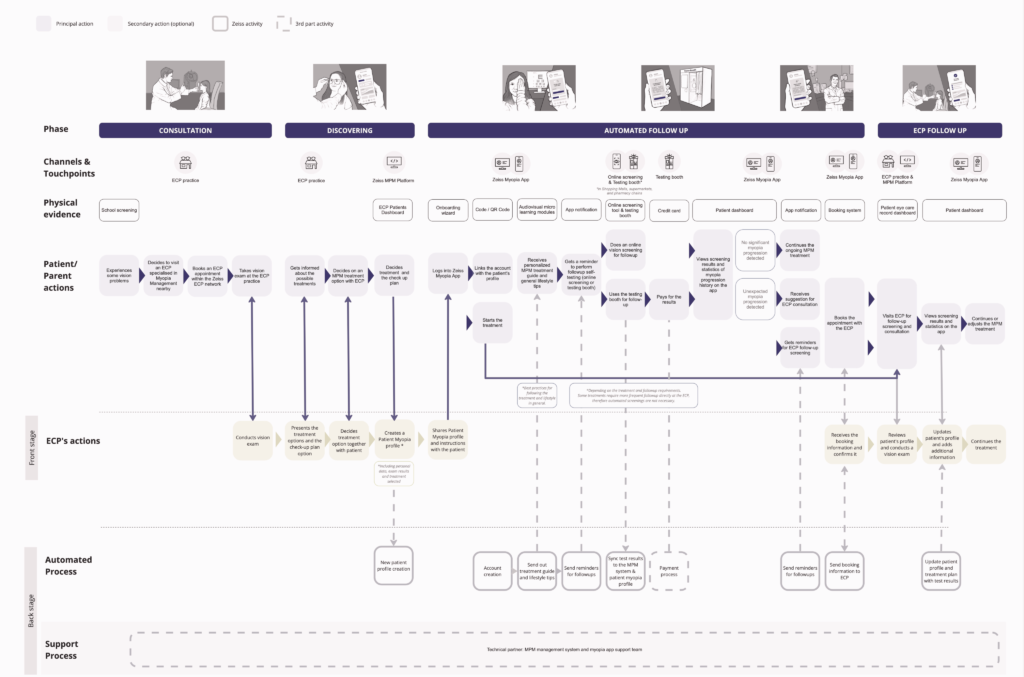
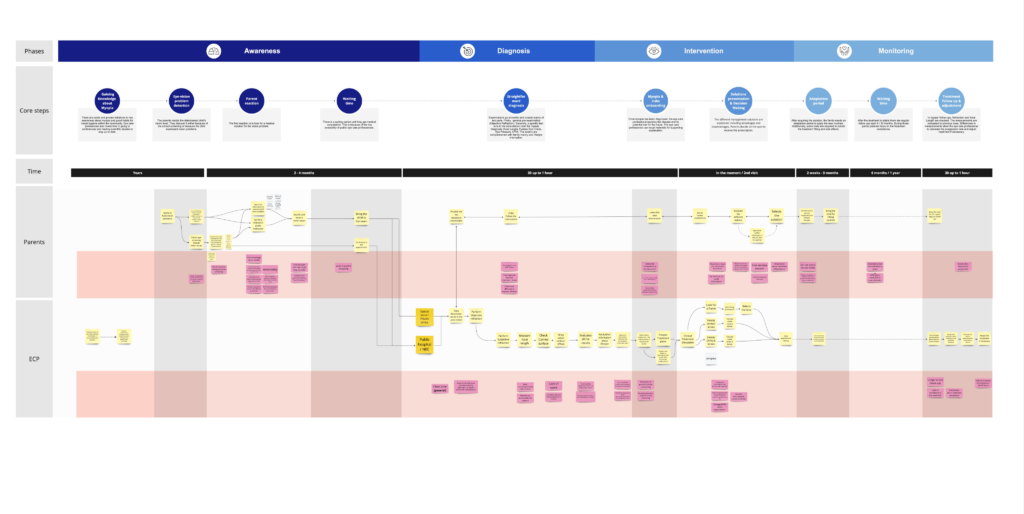
Over 20+ semi-structured interviews spanning all four groups, I mapped the full journey from first screening through long-term progression management.
The synthesis produced a service blueprint that gave us a previously fragmented one shared model of the patient journey, and shifted the framing of the design problem from correcting vision to managing progression over time.
Identifying opportunities for competitive advantage in a product-centric market
In a market where competitors differentiate on products and align with patients' experience, the opportunities revolved around the experience with products in the early stages of the disease and long-term management, parts of the journey no one had claimed.
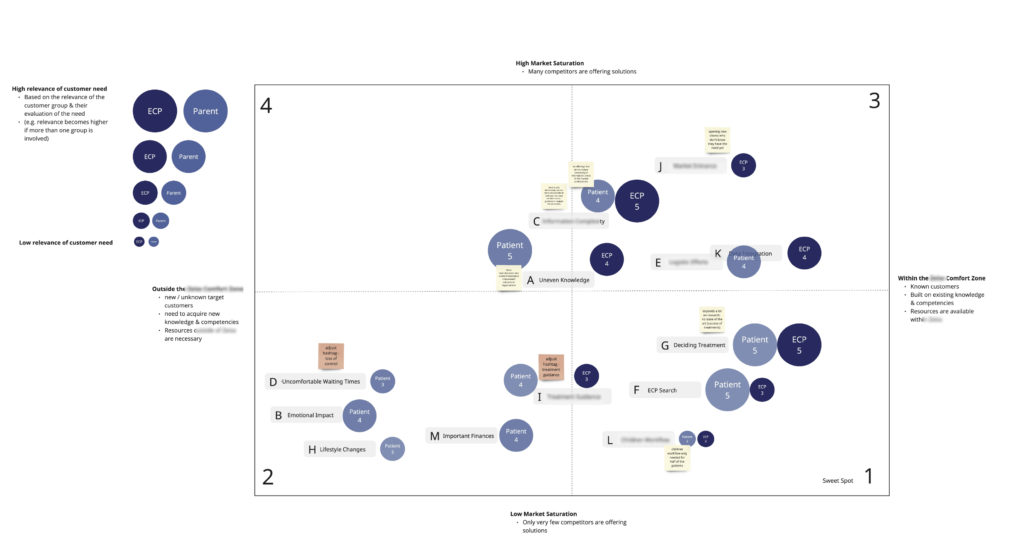
After investigating the market and competitor positioning, company brand, industry regulation, user behavior and context, and consumer and technology trends, we consolidated the findings into an analysis matrix mapped against the user journey, surfacing where unmet needs and market gaps overlapped.
Turning opportunities into solutions for myopia management.
ideas
The most promising opportunities were ones the company could already deliver.
Thirteen opportunity areas were evaluated against market suitability and the company's own comfort zone (user needs, market dynamics, internal capabilities).
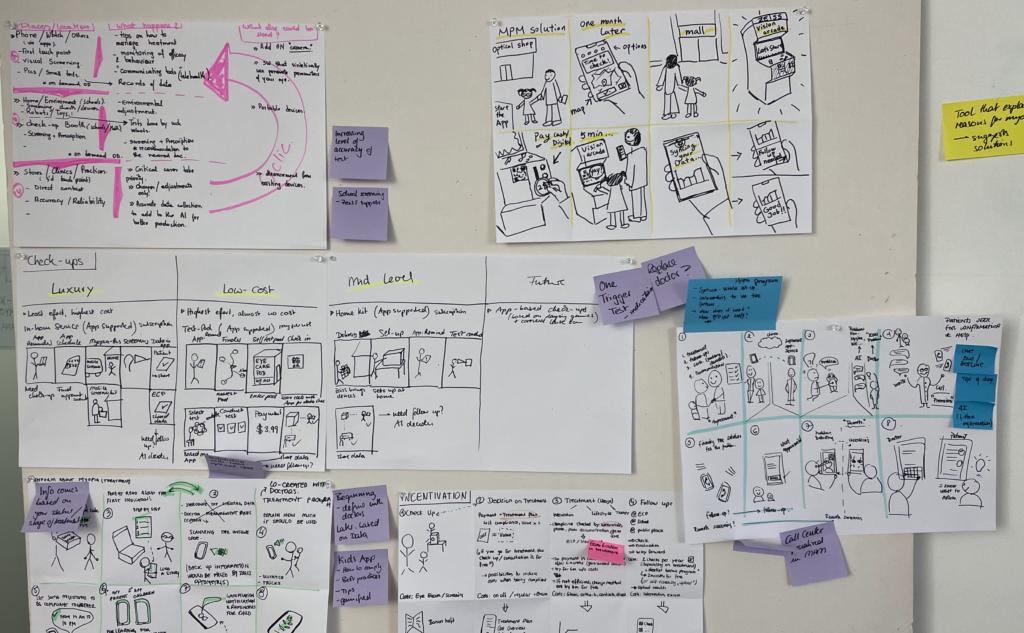
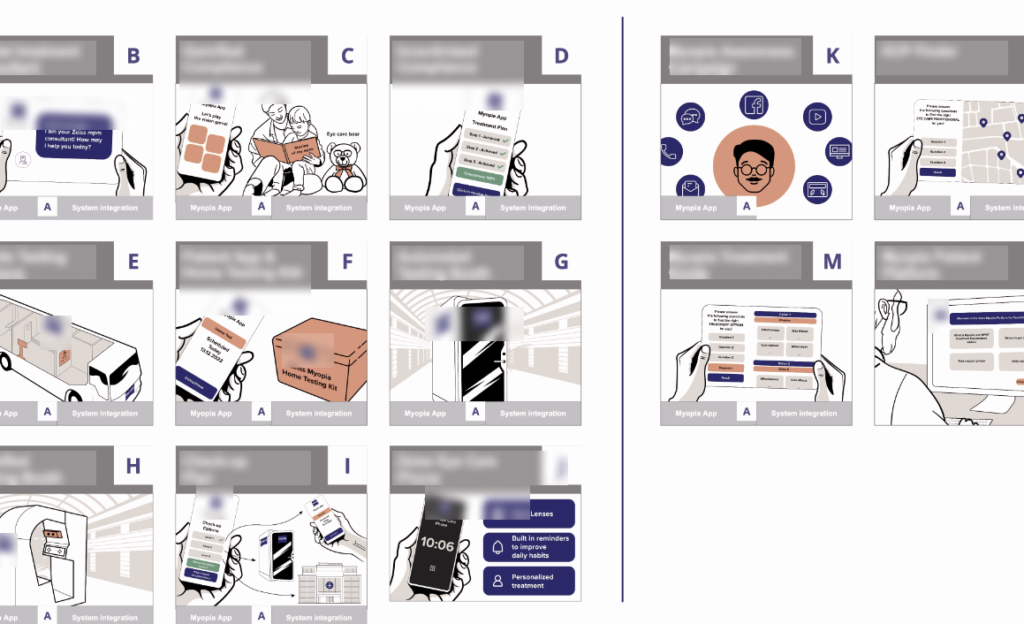
Four survived. All four sat in territory the company hadn't explored but was already equipped to serve, which made repositioning a matter of direction rather than investment. Those four areas were then developed through generative methods into eighteen potential solutions.
Enhancing the doctor-patient long-term relationship
Five concepts went into validation with patients, caregivers, and eye care professionals. The three that survived all addressed the same thing: what happens between appointments and between people.
The three concepts
- Conveying health information effectively — closing the gap between what patients are told and what they act on
- Easing eye care professionals' work in treating myopia — reducing the effort of managing progression over time
- Improving frequency and accuracy of sight check-ups — addressing late detection at its source
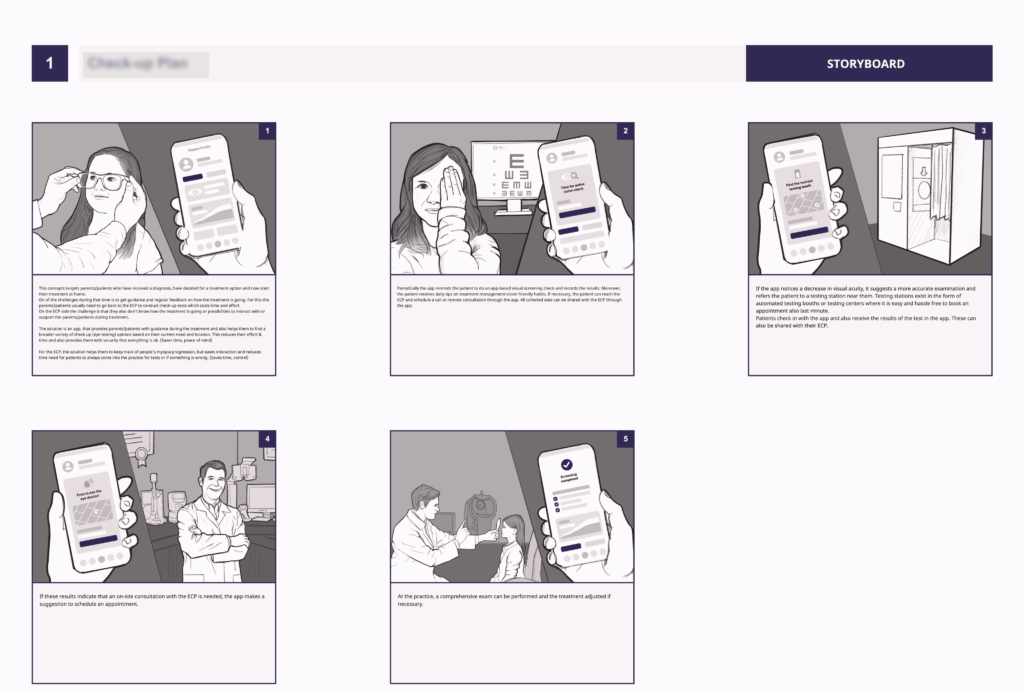
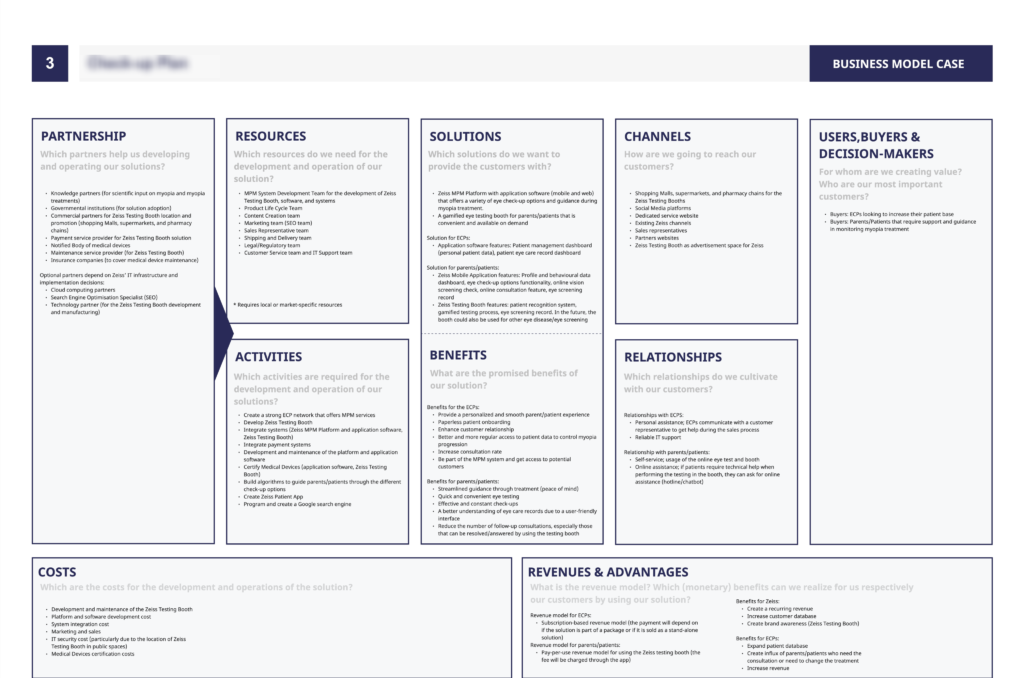
Design and technical teams then iterated on the three, incorporating validation feedback and developing each into a package the company could act on: a detailed solution description, storyboards, a mid-level service blueprint, a business model canvas, and a technical evaluation by an engineering manager.